Interplay Between Genre Classifications and Accessory Types in Digital Gaming Retail Systems
Written by Bianca Hansen · Jun 28, 2026
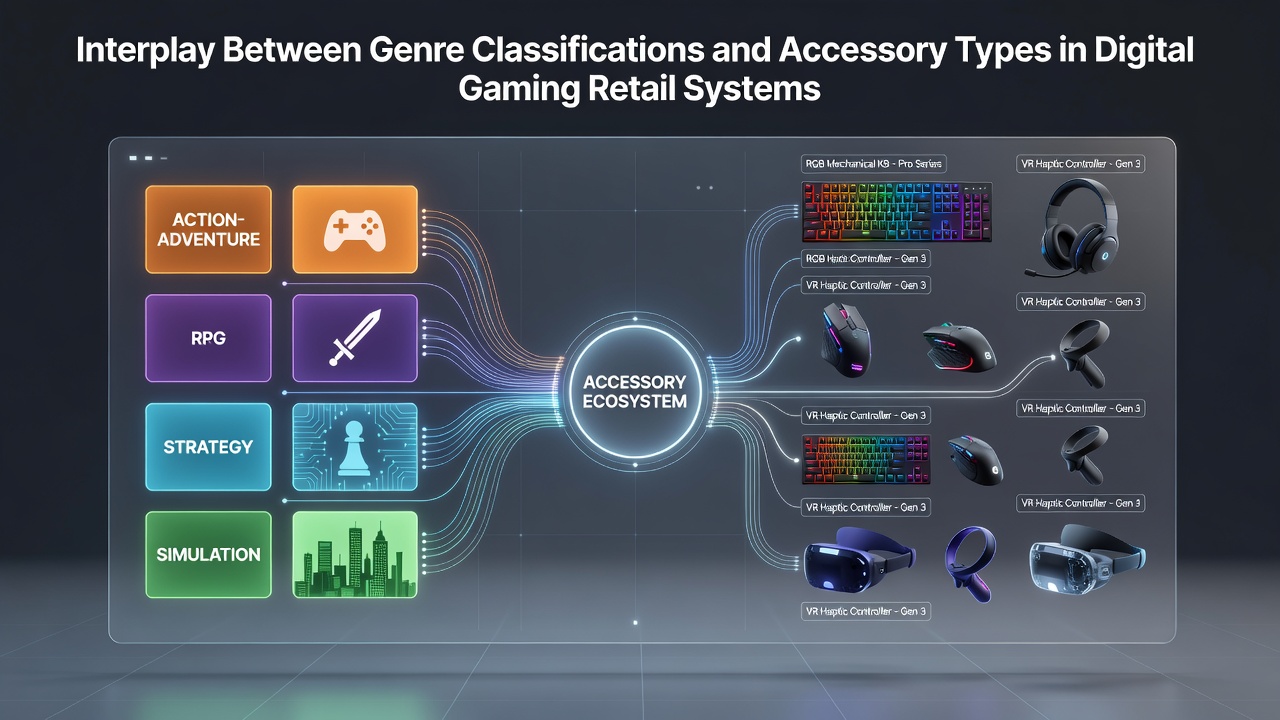
Interplay Between Genre Classifications and Accessory Types in Digital Gaming Retail Systems
Digital gaming retail systems organize vast inventories through structured taxonomies that connect genre classifications with accessory types, and these frameworks enable efficient product discovery while supporting backend inventory management across multiple platforms. Retail platforms maintain separate but linked databases where genres such as action, strategy, simulation, and role-playing receive distinct identifiers that interact with accessory categories including controllers, mounts, storage solutions, and input devices. Data models in these systems use relational mappings so queries for a particular genre surface compatible accessories without manual intervention from store operators.
Genre Classification Structures in Retail Databases
Genre taxonomies in gaming e-commerce rely on hierarchical categories that break down into sub-genres and thematic tags, and these structures draw from industry standards maintained by organizations like the Entertainment Software Association. Platforms assign primary genre labels at the product level, then apply secondary attributes such as multiplayer support or single-player focus to refine search results. Classification updates occur regularly as new releases introduce hybrid mechanics that blend elements from multiple genres, which forces retail systems to adjust relational links dynamically. In June 2026, several major storefronts implemented automated tagging algorithms that cross-reference user behavior data with genre metadata to improve recommendation accuracy across console and handheld libraries.
Accessory Type Categorization and Compatibility Rules
Accessory classifications follow parallel hierarchies that group items by function, platform compatibility, and ergonomic features, and these groupings connect to genre data through compatibility matrices stored in the same backend architecture. Input devices receive tags based on button layouts and motion sensitivity, while mounting solutions carry attributes related to portability and viewing angles. Retail systems apply rule-based filters that associate certain accessory types with specific genres during product uploads, which reduces mismatches in curated bundles and search suggestions. Observers note that these compatibility rules evolve when new hardware launches introduce revised interface standards that affect how accessories integrate with existing genre collections.
Relational Mapping Between Genres and Accessories
The core interaction occurs through relational database tables that link genre identifiers to accessory attributes using foreign keys and junction tables, and this setup allows storefronts to generate dynamic category pages that display relevant pairings. Action-oriented genres frequently connect to specialized controllers with additional triggers or haptic feedback modules, whereas simulation genres link to precision input devices and storage accessories designed for extended play sessions. Data flows from product management systems into customer-facing interfaces so users browsing one genre encounter suggested accessories that align with typical play patterns for that category. Research from the Interactive Software Federation of Europe indicates that platforms utilizing these integrated mappings experience measurable improvements in cross-category conversion rates during seasonal promotions.
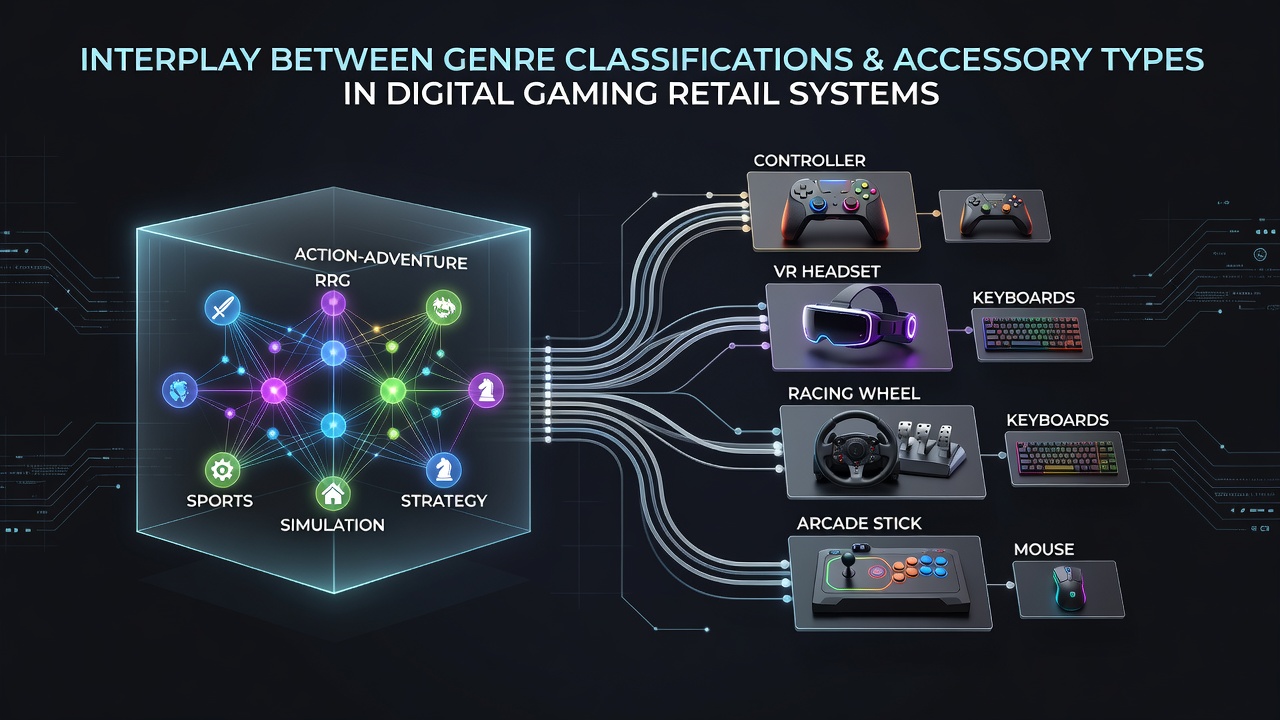
Backend processes handle updates when genre classifications shift due to content patches or expanded editions, and accessory associations refresh accordingly to maintain consistency across search indexes. Retail operators rely on these automated connections rather than manual curation because the volume of SKUs across global inventories exceeds practical human oversight. Those managing large digital storefronts report that unified category systems prevent orphaned products that lack proper genre or accessory associations, which preserves overall site navigation integrity.
Impact on Search Functionality and User Navigation
Search algorithms in digital gaming retail incorporate both genre and accessory parameters simultaneously, and this dual-index approach supports complex queries that combine elements from each classification system. Users can filter results by genre while specifying accessory requirements, which surfaces complete setups rather than isolated items. Platform developers refine these algorithms using aggregated transaction data that reveals common pairing patterns across different regions and demographic segments. The result appears in recommendation engines that suggest accessories when users add genre-specific titles to their carts, streamlining the checkout process through preemptive compatibility checks.
Data Integration Across Multiple Retail Channels
Modern storefronts integrate genre and accessory data across web, mobile, and third-party marketplace channels through standardized APIs, and this integration ensures consistent classification regardless of access point. When a new accessory launches, its metadata includes predefined genre associations that propagate automatically to all connected systems. International retailers adapt these mappings to account for regional preferences in genre popularity and accessory usage, which requires flexible schema designs that accommodate varying regulatory and cultural contexts. According to reports from the Australia Council for the Arts on digital entertainment trends, such adaptable frameworks support sustained growth in accessory sales tied to established genre libraries.
Conclusion
Genre classifications and accessory types function as interconnected components within digital gaming retail systems, and their interplay relies on robust database structures, automated mapping processes, and ongoing data refinement. These relationships enable precise product organization that supports both customer navigation and operational efficiency across expanding inventories. As platforms continue to scale, the maintenance of accurate relational links between genres and accessories remains essential for delivering coherent retail experiences that reflect the diversity of available gaming content and hardware options.