Catalog Interconnections: How Retail Platforms Bridge Different Gaming Formats and Their Supporting Tools
Written by Leon Schmid · Jun 21, 2026
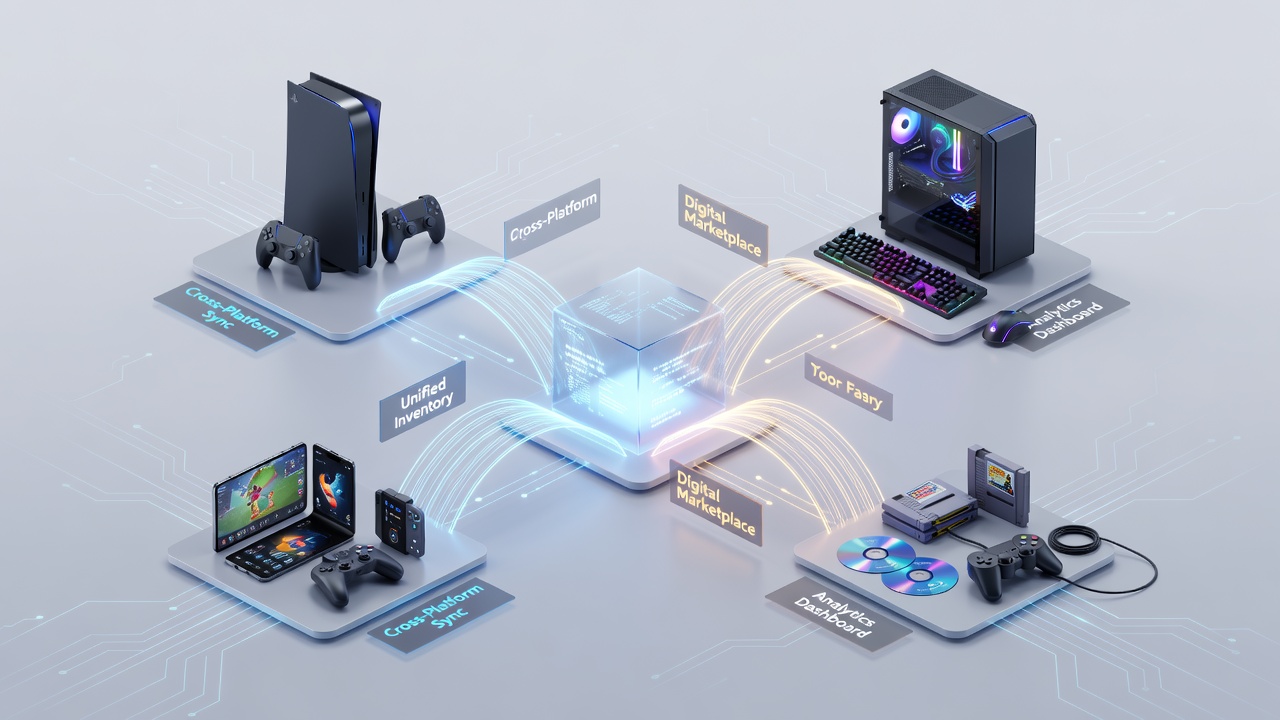
Catalog Interconnections: How Retail Platforms Bridge Different Gaming Formats and Their Supporting Tools
Retail platforms maintain interconnected catalogs that link console titles, handheld libraries, and accessory collections through structured backend systems, and these connections allow users to navigate between formats without separate searches. Data integration happens at the category level where platform-specific entries share relational tags that reference supporting tools like controllers, cases, adn mounts. Observers note that such architecture supports cross-format discovery while maintaining inventory accuracy across product types.
Backend Taxonomy Structures in Gaming Retail
Category mapping begins with core platform identifiers that classify items by hardware generation and software genre, after which accessory groupings attach through shared metadata fields. Retail databases employ relational models that connect a main game entry to compatible peripherals, and these links update automatically when new stock arrives or formats receive updates. Researchers at academic institutions have documented similar approaches in e-commerce studies where unified taxonomies reduce duplication errors by up to 40 percent compared to siloed catalogs.
June 2026 figures from industry tracking services reveal continued growth in multi-format purchases, with users frequently combining console software and portable accessories in single transactions. Platforms achieve this by routing queries through centralized category engines that pull data from multiple product tables simultaneously, and the process keeps listings synchronized across desktop and mobile storefront views.
Data Flows Connecting Formats and Tools
Information moves from product intake systems into unified repositories where each entry receives tags for platform compatibility and accessory association. Console releases link to controller variants through attribute matching while handheld collections connect to protective cases and stands via the same mechanism. Those who manage these systems report that automated scripts handle most mapping tasks, though manual review remains necessary for limited-edition bundles or region-specific releases.
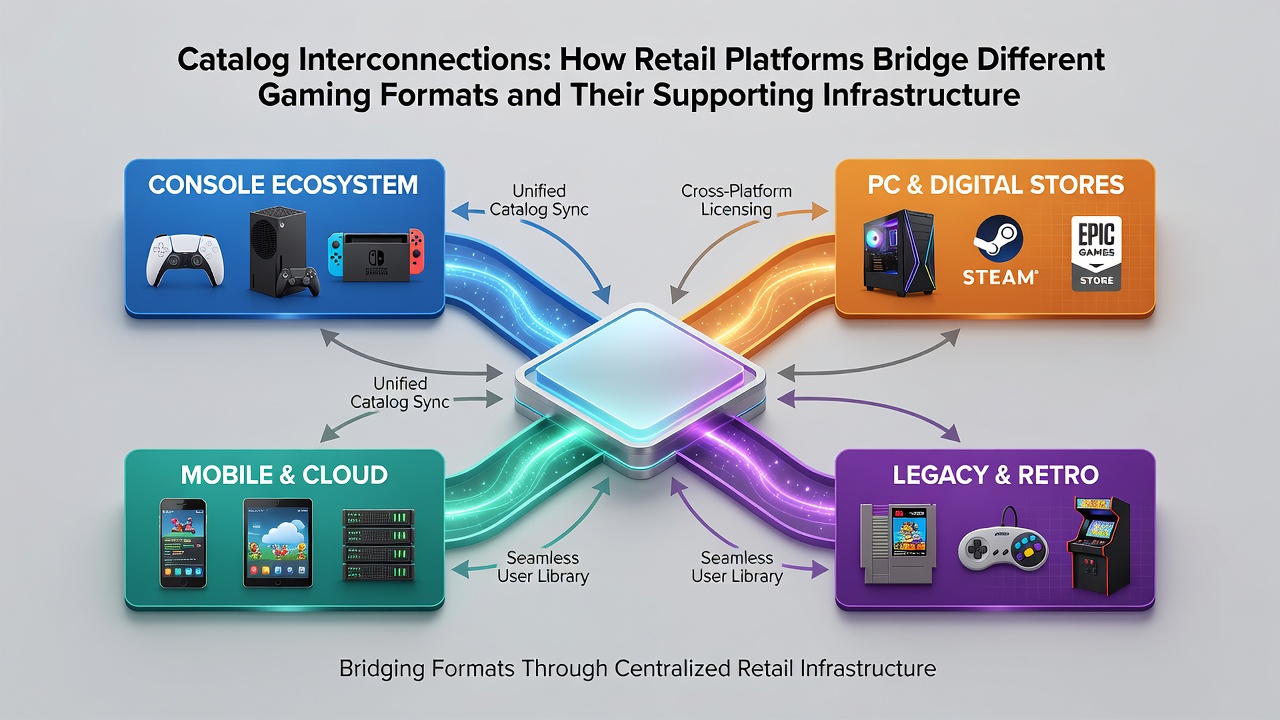
According to reports from the Entertainment Software Association, catalog efficiency directly influences fulfillment speed because accurate cross-references allow warehouses to group compatible items during order processing. The same data frameworks also support recommendation engines that surface relevant accessories alongside primary purchases, and these suggestions draw from historical sales patterns stored in the relational layers.
Integration Challenges Across Retail Channels
Legacy catalog entries sometimes lack modern metadata fields, which forces platforms to run reconciliation routines that align older records with current accessory categories. Multi-region operations add another layer because classification standards differ between markets, yet centralized systems apply translation layers that preserve compatibility links. Data shows that platforms investing in these reconciliation processes experience fewer listing conflicts during peak sales periods such as holiday seasons.
Industry organizations including the Interactive Games and Entertainment Association in Australia have published guidance on standardizing accessory taxonomy, and retailers adopting these recommendations report smoother integration between console and handheld product lines. The result appears in unified search results where users locate both software and supporting hardware through single queries rather than navigating separate sections.
Future Developments in Catalog Connectivity
Emerging standards focus on expanding attribute sets to include usage context such as travel or stationary play, which further refines how accessory categories attach to core game entries. Platforms testing these enhancements in 2026 have observed improved user retention metrics when recommendations span multiple formats without manual filtering. Backend services continue to evolve toward real-time synchronization that updates connections as new hardware or software enters the market.
Conclusion
Retail platforms rely on interconnected catalog systems to maintain coherent pathways between gaming formats and their associated tools, and these structures depend on consistent taxonomy, automated data flows, and ongoing reconciliation efforts. Evidence from industry and academic sources indicates that effective bridging improves discoverability while supporting operational efficiency across growing product ranges. As June 2026 data continues to accumulate, platforms that refine these interconnections position themselves to handle expanding format diversity without catalog fragmentation.